

This week my youngest son, who’s 16 and taller than me so that should give you a better picture, had to go to the dentist for a filling. If you know a little about me and my family you’ll probably know we are a neurodiverse bunch.
For most families then, this outing probably isn’t easy but when I say this is different level then I mean it. This is a significant event that has been overthought for around a month or so prior to getting there. He has never had a dental instrument in his mouth without holding it himself.
Like many autistic people, unfamiliar environments, uncertainty and physical touch can all be overwhelming, so the thought of someone working inside his mouth had been causing him a lot of anxiety for a while.
As parents, you carry a fair bit of that anxiety yourself. I’ve never figured out how to not feel a large chunk of what they are feeling. You hope the treatment can be completed, of course you do, but more than that you hope your child feels safe enough to even give it a go.
Experience tells you that things don’t always go to plan and when I thought about the dentist I could just imagine the pressure of a busy waiting room or his appointment over running, all causing more stress.
It wasn’t the filling that impressed me
The dentist was clearly very good at his job. The treatment was completed successfully and, from a technical perspective, I’m sure everything was exactly as it should have been. It’s held up since so that maybe answers that one.
However, if you asked me what impressed me most, I don’t think I’d mention the quality of the dentistry.
What I noticed was the way he worked with my son. I guess I would notice this given our challenges in this environment.
He listened patiently to every question, even when the same question came around more than once (which was lots). He explained what he was doing without ever sounding frustrated or dismissive. He seemed to recognise when anxiety was beginning to build up and instinctively adjusted his pace rather than expecting my son to adjust to his.
The appointment overran, but there was never any sense that we had become an inconvenience. He didn’t keep looking at the clock, rush to move us on or make us feel as though we were delaying the rest of his day. There was no huffing and puffing.
For that hour, despite everything else that must have been going on around him, he made my wife and son feel like they were safe, cared for and mattered to him. That’s what she told me anyway as I didn’t get this first hand.
By the end of the appointment he had successfully completed the filling, which I was amazed to hear in the first instance.
But I immediately thought about something else that had happened that felt even more significant, for me anyway.
This guy had become one of the very few people in the world that my son has willingly allowed to touch him physically. This includes his own family.
When you know our son, you know that isn’t something that happens by accident and he managed this in a short window. How did he do that? I wished I had been there to see how it was explained to me in case he had some other tricks he was using. Even more impressive when my wife told me he was in his early 20’s and fairly new.

Expertise is about more than technical skill
I found myself thinking more about what this meant as it seemed there was some important message in here somewhere. Was this guy just what you would call an excellent dentist?
What is one of those anyway?
He obviously had the technical expertise and will have trained extensively around that. Without that he couldn’t have done it for sure.
But technical expertise, on its own, wasn’t enough for this situation and that’s where all of our initial anxiety and reservations were held.
The reason the treatment became possible was because he created the conditions for that expertise to be accepted. Trust came before treatment and patience came before progress. He knew how to demonstrate understanding.
As ever I tried to think about what this meant when moving it into my practice. The more I thought about it, the more it reminded me of something I see regularly when working with leaders, especially in coaching context.
Many people step into leadership because they are exceptionally good at the technical aspects of their profession. So you get the best engineer becoming the Engineering Manager or the strongest operational performer finds themselves leading a team (my own route into management initially).
There is nothing wrong with this, of course not. Technical credibility matters and people naturally want confidence that their leader understands the work.
The problem comes when technical excellence is mistaken for complete leadership capability or it’s given such high regard that the ‘other stuff’ aren’t paid enough attention to.
The leadership lesson
Leading people asks something different of us. It asks us to listen before we solve, to understand before we direct and to adapt our approach to the individual in front of us rather than expecting everyone to respond in exactly the same way and adapt to us. It asks us to recognise that what motivates or reassures one person may have little effect on someone else.
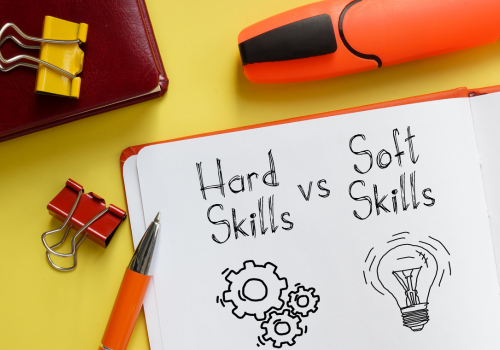
Those capabilities are often grouped together under the label of “soft skills”, which I believe doesn’t help as a label for a host of reasons we can discuss another time.
It’s fair to say there was nothing soft about what happened at the dentist. The patience, emotional awareness and self-control that dentist must have demonstrated were every bit as skilled as the clinical work he carried out. In fact, I would go as far as saying the clinical work only became possible because those qualities were present. Get a more experienced dentist with high technical skills and lower enabling skill and this appointment would have ended fairly quick and badly. A complaint may have followed if it was really bad.
We sometimes talk as though empathy and high performance sit at opposite ends of a spectrum, as though creating time for people somehow means compromising on results. This example suggested exactly the opposite. The filling wasn’t completed despite the patience and understanding. It was completed because of them. If you want to tie performance in then you should know they got a compliment and recommendation off the back of it.
The same can be said in leadership. The results we want frequently depend less on having all the answers than they do on creating an environment where people feel safe enough to engage with us, ask questions, admit uncertainty and trust us enough to move forward.

A final reflection
Speaking to my son after he got home reminded me that people rarely experience us solely through our technical competence.
Whether we’re a dentist, an engineer, a teacher or a leader, people experience the way we listen. They notice our patience. They remember whether we adapted to them or expected them to adapt to us.
Technical expertise will always matter. It is the foundation of any profession and I personally wouldn’t want someone technically incompetent on a job requiring a standard of technical expertise.
But perhaps what separates good from great is what happens once that technical expertise meets another human being.
How much priority/focus are you placing on developing outside technical expertise for both you and your teams?